
Municipal compost facilities that accept 500 tonnes or less of yard waste annually will now be exempt from the Code of Practice for Compost Facilities and certified operator requirements. Previously, these small-scale facilities were subject to the same requirements as larger composting operations, despite the low-risk nature of their activities.
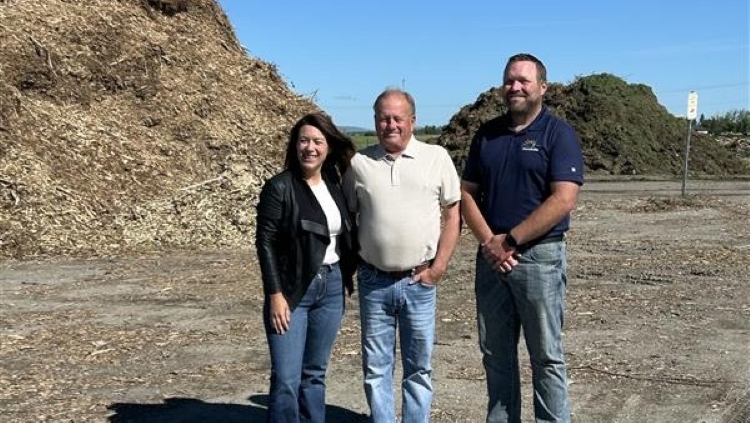
Chelsae Petrovic, MLA for Livingstone-Macleod, with Brad Schlossberger, mayor of Claresholm, at the Claresholm Compost, one of the facilities that will benefit from the new exemption.
"Composting takes what is no longer useful, breaks it down and turns it into something that helps things grow. That is exactly what we are doing with unnecessary red tape - making room for more freedom, more common sense and better results for Alberta communities."
Grant Hunter, Minister of Environment and Protected Areas
"I'm pleased to see government cutting unnecessary red tape so rural communities can continue offering yard-waste compost to residents. This practical solution supports sustainability, reduces landfill waste, lowers costs and helps communities manage waste more effectively."
Chelsae Petrovic, MLA for Livingstone-Macleod
The new exemption reduces unnecessary administrative burdens on municipalities and makes it easier for communities to divert organic waste from landfills, reduce methane emissions, lower transportation costs and produce valuable compost for local use. This practical approach better reflects the scale and nature of municipal yard-waste composting while aligning Alberta's regulatory framework more closely with those in other provinces.
Quick facts
- Yard waste includes grass, leaves, branches, organic garden waste and trees. It is estimated to make up about 9.8 per cent of total municipal waste in Alberta.
- There are about 14 yard-waste facilities in Alberta that accept 500 tonnes per year or less and are owned and operated by a municipality.
- Alberta was the only province that had a certified operator requirement.
- Organic waste, if not turned into compost, can attract pests, produce leachate and offensive gases and cause fires.
Related information
For more information