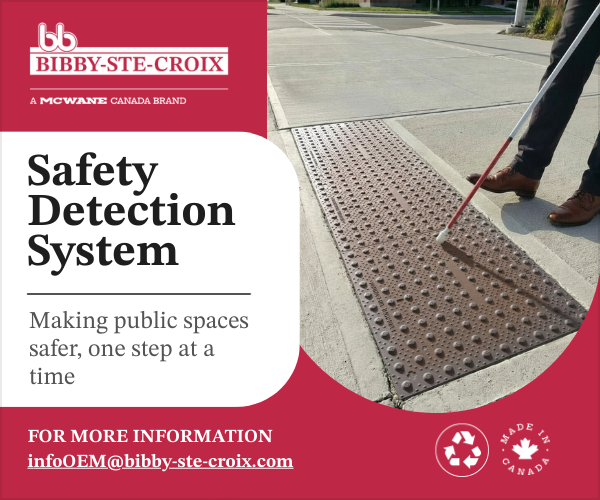

To be truly inclusive, public outdoor spaces must meet the needs of the entire population, regardless of age, physical ability or mobility.
Although many cities have adopted universal accessibility policies in recent years, it's important to consider whether these policies have actually improved accessibility and the experiences of citizens who live there.
Public spaces can become a source of fatigue and stress for older people if their features are not properly designed.
Several fields of research in urban design, urban planning, and architecture offer valuable tools for understanding the level of accessibility in public spaces. Three dimensions are particularly relevant, since they directly concern the way a built environment meets the needs of people with motor, visual or cognitive impairments. These three dimensions comfort, legibility, and geometric clarity enable us to assess whether a space is truly designed for everyone.